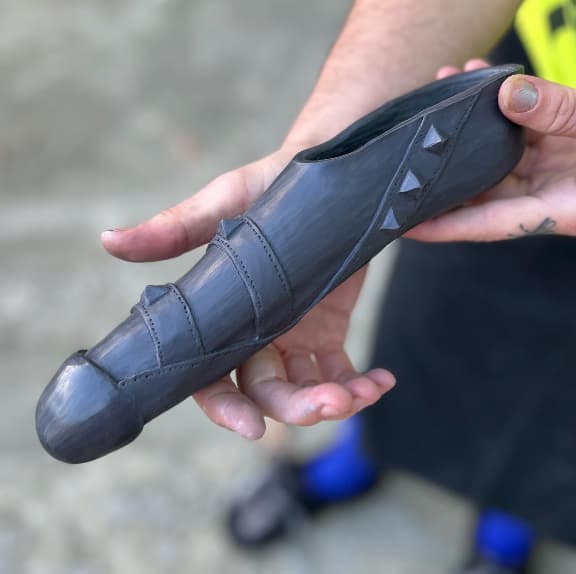
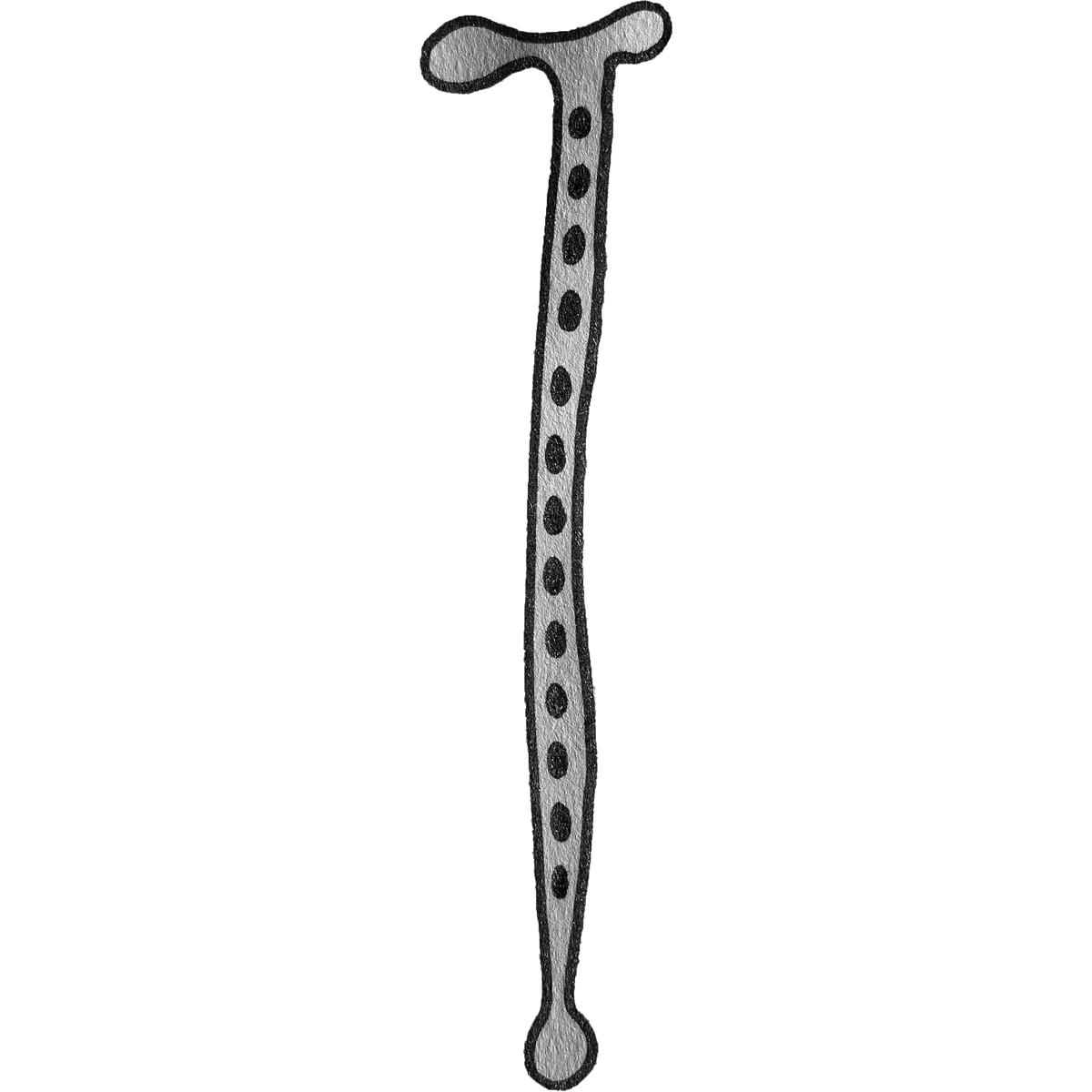
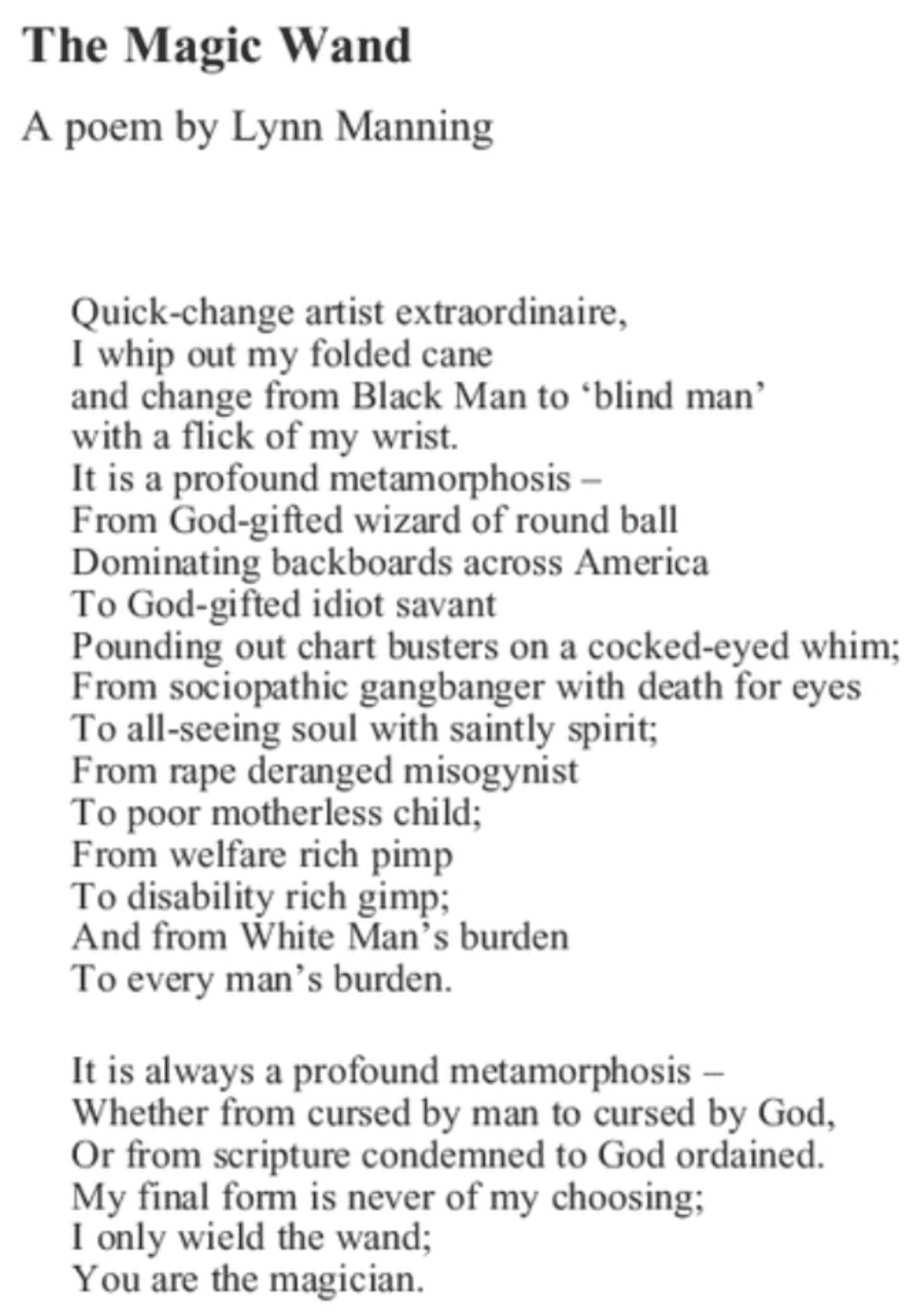
White canes are a tool for Blind and Low vision community's right of access and freedom of movement in public places. White canes are often made of aluminum, graphite-reinforced plastic or other materials. With contested origin points, Richard Hoover, James Biggs, Guilly d'Herbemont, Louis Braille, are all involved in origin stories of the white cane in Western contexts. In what is always already a coalition of terms, contexts, materials and people, white canes are often legally about alerting sighted people that Blind people are navigating though the city. When when Blind or Low Vision community members are walking with a white cane there are many nation-states that have legally implemented specific protections, for example white cane using pedestrians are given the right-of-way in traffic law. In this way, white canes are often also about alerting non-disabled people to the presence of Blind people moving in the cityscape. Excavating the world of non-visual travel norms is something that artist, Carmen Papalia engages in his project Blind Field Shuttle. The poem that speaks about this particular shaft, "The Magic Wand" by the late Lynn Manning speaks about the intersections of racism and ableism that Lynn experienced as Black Blind man.